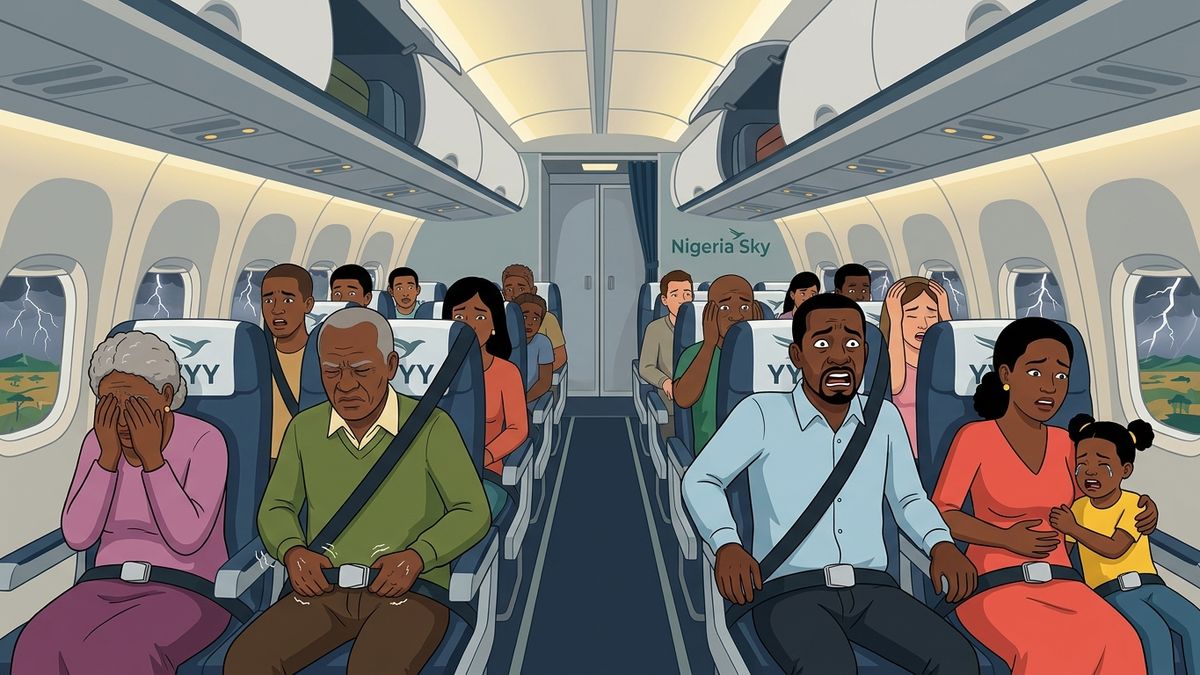
For many Nigerian air travellers, turbulence is an all too familiar sensation, those sudden jolts or drops mid flight that can spark panic, even among seasoned flyers. Yet while turbulence may feel dramatic, it is a normal part of flying and commercial aircraft are designed and operated to withstand substantial aerodynamic loads. The greater immediate risk to passengers is often injury caused by sudden aircraft movement, particularly when people are not properly restrained.
What Exactly Is Turbulence?
Turbulence refers to irregular or disrupted airflow that causes an aircraft to move unpredictably. These movements, often described as “bumps in the sky”, can vary considerably in intensity. Commercial aircraft are designed and certified to withstand substantial aerodynamic loads, while pilots are trained to manage turbulence and avoid hazardous weather when possible. For passengers, however, turbulence can still be dangerous, particularly when sudden movements cause unrestrained people or objects to be thrown around the cabin.
What Causes Turbulence?
Several natural and mechanical phenomena cause turbulence. One major source is thermal turbulence, which occurs when rising warm air, common during Nigeria’s dry season, causes atmospheric instability. Mechanical turbulence results when wind flows over uneven terrain such as hills or mountains, relevant in Nigeria around the Jos Plateau and central regions.
Clear Air Turbulence, known as CAT, is a global challenge that occurs at high altitudes near jet streams and is hard to detect via radar. Wake turbulence stems from large aircraft passing by and is mitigated by air traffic control spacing rules. Weather related turbulence, most frequent over Nigerian airspace, is linked to thunderstorms, wind shear, and microbursts, especially prevalent during the rainy season from April to October (when there was still a clear raining season).
The Nigerian Meteorological Agency, NiMet, consistently reports that thunderstorm activity increases the likelihood of turbulence, particularly in southern and central Nigeria (Nigerian Observer, 2024).
How Turbulence Affects Nigerian Routes
Certain domestic routes in Nigeria are more susceptible to turbulence due to weather patterns and geography. The Lagos to Abuja corridor, the country’s busiest air route, often experiences moderate to severe turbulence during climb and descent phases, especially in the wet season. The Lagos to Port Harcourt route, crossing the Niger Delta, is vulnerable to convective weather and wind shear. Flights between Abuja and Kano, although drier, may encounter mechanical turbulence from dust laden winds and elevated terrain.
A Personal Encounter With Silence at 30,000 Feet
Some time ago, I boarded a flight (let me disguise the commercial flight as “YYY”) from Abuja to Lagos. I have flown this route many times and rarely get unnerved by turbulence. But that particular flight left a mark on me.
Midway through the journey, the aircraft was suddenly engulfed in severe turbulence. It was not the light bumps that most of us expect. This was the kind that jerks your stomach and makes your hands grip the seat in front. The aircraft was thrown around like a kite in harmattan winds, and for several minutes, it felt like we were at the mercy of the sky.
What made the experience worse, however, was not the turbulence itself. It was the utter silence from the flight deck. Not a word from the pilot. No reassurance, no update, no acknowledgment that anything was happening at all.
For me, that silence was the most frightening part. Even a simple announcement asking passengers to remain seated with seatbelts fastened would have helped. But there was nothing. And in that silence, panic set in, not just for me, but visibly across the cabin.
After that experience, I vowed never again with YYY. I had heard good things about them, prompt service, courteous staff, affordable fares, but no cost saving is worth flying blind during a crisis. Unless no other airline is available, that would be my last flight with them.
And Then It Happened Again
Weeks after my experience, my friend and brother YK was flying home from Abuja to Lagos to celebrate his birthday with family. He too chose YYY for the journey, and he too experienced the exact same thing.
He described the turbulence as violent and told me how, during those long minutes of shaking and sudden drops, he thought it might be the end. Thoughts of his wife waiting at Lagos airport filled his mind. It was the day before his birthday, and he wondered if he would live to see it.
When he called me, I asked, half joking, if it was YYY. His voice dropped. It was. Same airline, maybe the same silent pilot.
Two incidents might be isolated, but the pattern of silence points to something deeper and deeply concerning.
Why Silence in the Sky Matters
In aviation, how pilots and cabin crew communicate during turbulence is critical. Turbulence itself is unpredictable and not caused by the crew, but how they anticipate, respond, and communicate can significantly affect passenger safety and comfort.
Failures such as not turning on the seatbelt sign in time, ignoring weather reports, or flying through avoidable turbulent areas increase risk. Not informing cabin crew prevents them from securing the cabin properly. Not briefing passengers creates panic or leads to non compliance with safety rules. Not reducing aircraft speed to turbulence penetration speed can increase structural stress and discomfort.
Cabin crew also have a crucial role. Failing to instruct passengers to buckle up, neglecting to secure carts or loose items, continuing service during turbulence, or ignoring protocols themselves puts everyone at risk.
The Nigerian Context
The Abuja to Lagos route is especially vulnerable to turbulence during the rainy season due to thunderstorms and atmospheric instability. Agencies such as NiMet and the Nigerian Civil Aviation Authority, NCAA, provide weather updates and require pilots to get briefings, but real time turbulence monitoring and forecasting remain limited. This increases the importance of how pilots and cabin crew respond once turbulence hits.
What Passengers Should Do
Passenger safety during turbulence comes down to simple but vital practices:
• Always wear your seatbelt, even when the sign is off. Unbelted passengers face the highest injury risk.
• Secure loose items and avoid moving around during turbulence.
• Follow crew instructions promptly.
• Stay calm. Aircraft are built to handle turbulence safely.
If turbulence makes you anxious, slow, controlled breathing may help. For example, you can breathe in gently for four seconds and out for six. Distractions such as movies, music or conversation can redirect your attention, while grounding techniques such as focusing on what you can see, hear and physically feel can help bring your attention back to the present moment. If you know caffeine makes you jittery, consider reducing it before flying. Avoid using alcohol as a way of managing anxiety and seek professional help if fear of flying becomes severe or persistent.
The Real Risk: Perception vs. Reality
Despite the discomfort, turbulence rarely threatens aircraft structure. The real risk lies in passengers or crew being unbelted during sudden movements:
- Light turbulence. Minimal discomfort, no threat.
- Moderate turbulence. Noticeable bumps, no threat.
- Severe turbulence. Rare, injury risk if unbelted.
- Extreme turbulence. Very rare, aircraft built to endure.
Modern jets are tested beyond these extremes. In truth, you are safer than you feel.
Conclusion: Turbulence Is Inevitable. Poor Communication Is Not
Turbulence is a normal, usually harmless part of flying. The safest thing passengers can do is wear their seatbelt, stay calm, and follow crew instructions.
However, as my personal experiences with YYY illustrate, silence in the cockpit during turbulence can turn a routine event into a traumatic ordeal. Nigerian airlines must prioritize clear communication and crew leadership during turbulence to reassure passengers and uphold safety.
Turbulence may be beyond control, but how airlines respond is not. For the sake of every passenger, like me and YK, the silence in the sky must end.